Smart Explorer Car Project
Project Context and Problem Statement
In robotics, space exploration and dangerous areas, rovers are among the most important tools for collecting data without exposing human lives to danger.
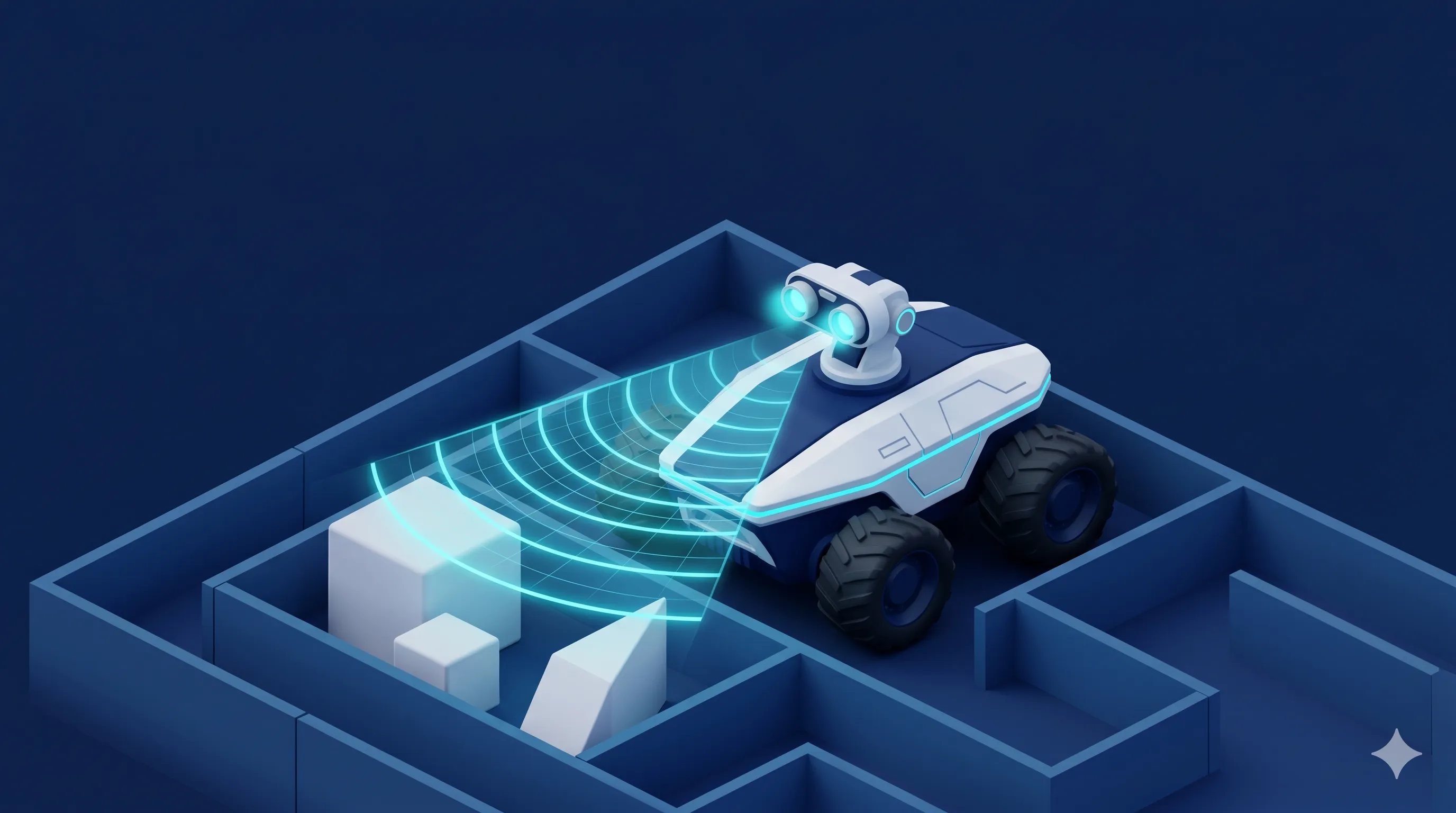
This project addresses autonomous navigation in unknown or obstacle-filled environments. It aims to design a robot capable of exploring its surroundings, detecting barriers and making immediate decisions to change direction automatically and independently.
Technical Components and Engineering Design
This explorer robot was built by combining a solid mechanical structure with a smart sensing system. It consists of:
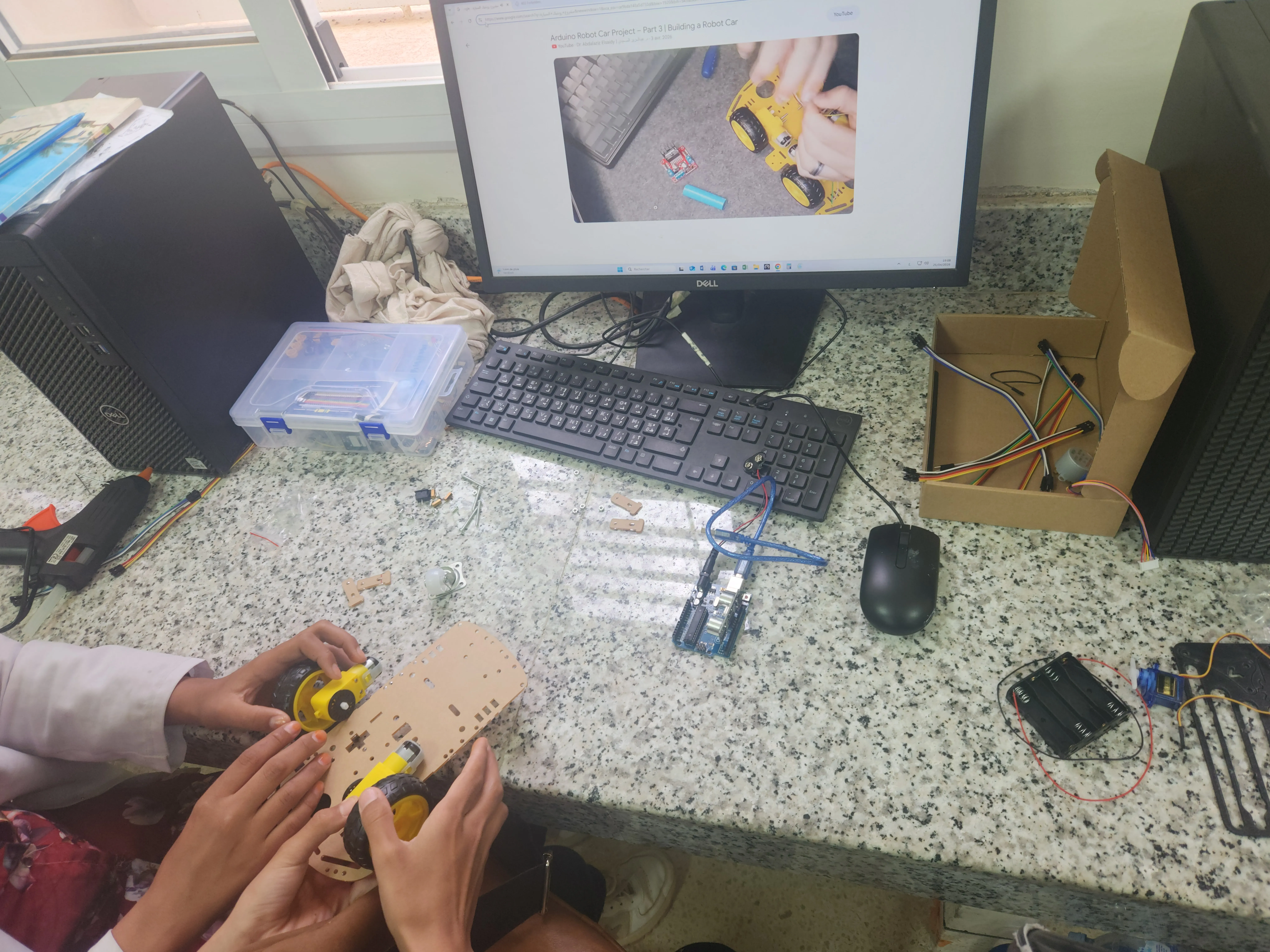
- Chassis and motion systems: a 2WD car chassis equipped with two wheels connected to DC motors and a castor wheel for easy turning and maneuvering.
- Vision and sensing system: an HC-SR04 ultrasonic sensor that acts as the robot’s eyes to measure distances accurately.
- Scanning system: a servo motor carrying the distance sensor and rotating 180 degrees to scan left and right and determine the best route.
- Central control unit: an Arduino board programmed to analyze incoming sensor data and control the car motors through a motor driver.
Implementation and Methodology
The explorer robot follows a smart obstacle-avoidance algorithm:
- Direct movement: the robot moves forward as long as the path is clear.
- Danger detection: when it approaches an obstacle at a defined distance, it stops immediately to avoid collision.
- Scanning and decision-making: the servo turns the ultrasonic sensor right and left to measure available distances in both directions.
- Path change: the control unit compares the two distances and directs the motors to turn toward the wider direction to continue exploration.
Connection to the Sustainable Development Goals
This project supports the Sustainable Development Goals through:
- Industry and innovation (Goal 9): developing autonomous navigation algorithms and designing robots that can adapt to their environment.
- Sustainable cities and communities (Goal 11): the idea can later be developed for search and rescue operations in narrow or collapsed places.
Team and Task Distribution
To ensure integration between the mechanical structure and programming, tasks were carefully distributed:
- Vision and exploration engineering: handled by Rmissa Aarab, who focused on programming the ultrasonic sensor and linking it to the servo motor to create an environment scanning and decision-making algorithm.
- Motion and chassis engineering: handled by Hiba Mellouki, who assembled the 2WD mechanical chassis and programmed the motor control unit to ensure fast response and accurate turns based on the sensing system commands.
Young engineers involved in this project

Hiba Mallouki
Movement and Chassis Engineer
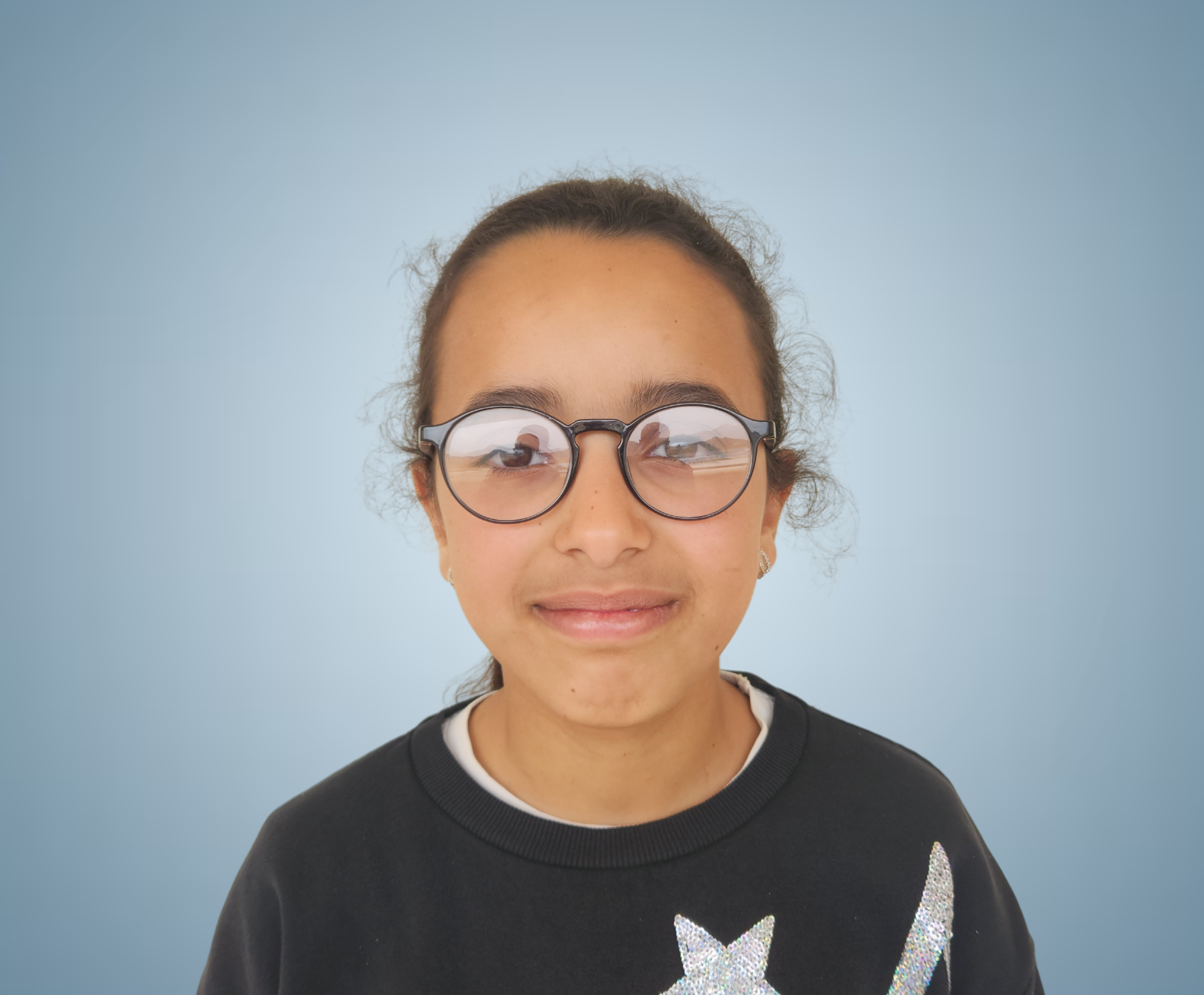
Romayssae Aarab
Vision and Exploration Engineer