

Smart Helmet System for Driver Protection
Project Context and Problem Statement
Official statistics from Morocco’s National Road Safety Agency (NARSA) show that motorcycle users are the most vulnerable category on the road, representing more than 40% of total road accident deaths. The main cause is often failure to wear a protective helmet.
Based on this alarming reality, the smart helmet project was created as a preventive technological solution. It addresses negligence in safety measures by making helmet wearing a mandatory condition for starting the motorcycle engine, automatically protecting the rider.
Technical Components and Engineering Design
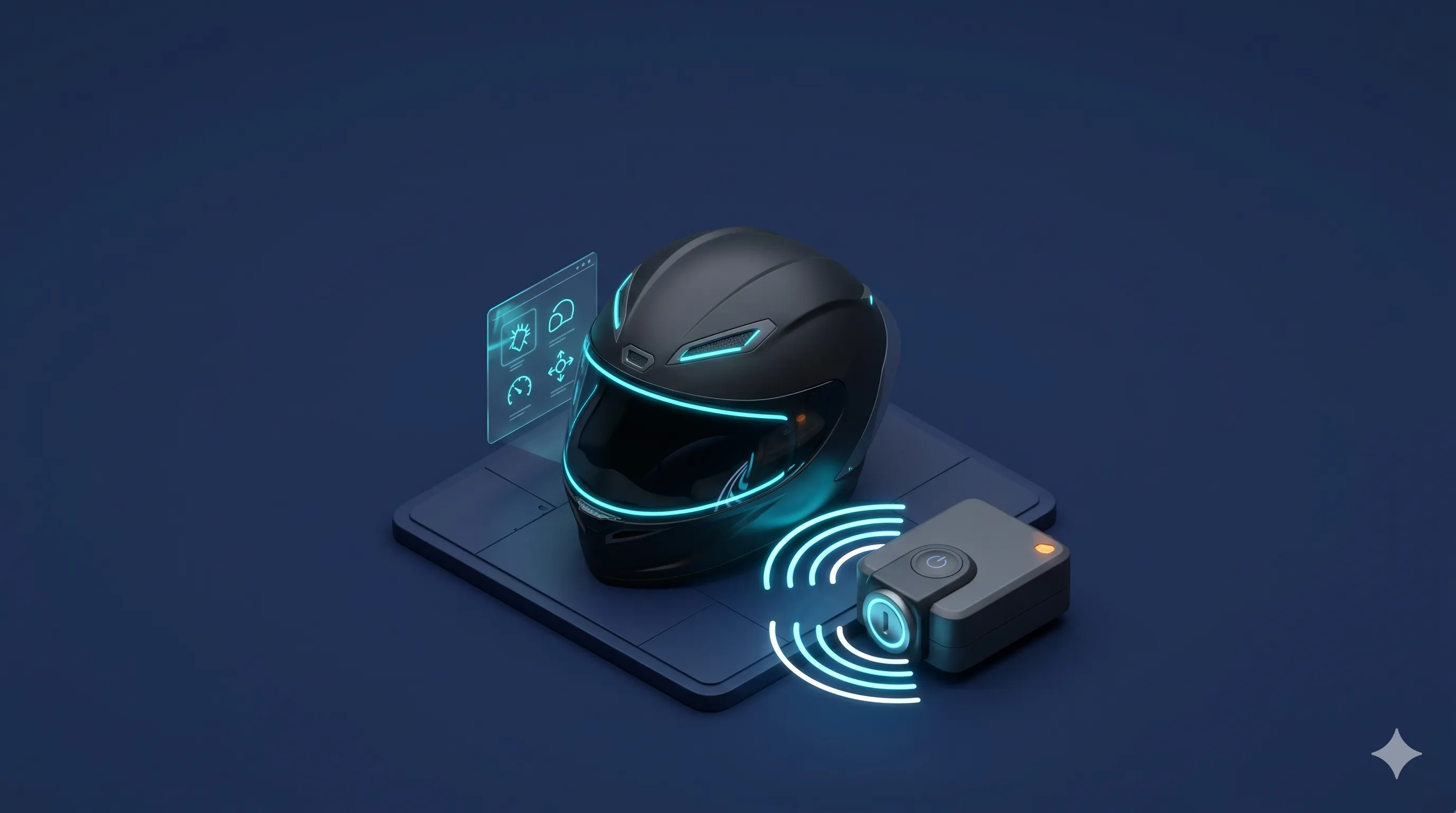
This embedded system is divided into two separate units that communicate wirelessly to ensure safety:
- Helmet unit (transmitter): based on a small Arduino board, equipped with an infrared sensor or push button to verify that the rider is actually wearing the helmet, plus a wireless transmitter module.
- Motorcycle unit (receiver): contains an Arduino board connected to a wireless receiver and a power relay controlling the engine ignition circuit.
- Accident detection system: a vibration or tilt sensor integrated into the helmet to detect a collision or sudden fall.
Implementation and Methodology
The system works as a closed safety loop that cannot be easily bypassed:
- Mandatory start condition: when the rider gets on the motorcycle, the engine start circuit remains locked. Once the helmet is worn, the internal sensor detects the signal and the Arduino sends an encrypted wireless command to the motorcycle unit to allow the engine to start.
- Automatic blocking: if the rider removes the helmet while stopped or before moving, wireless communication is interrupted, causing the engine to stop immediately and preventing unsafe riding.
- Collision detection: in case of an accident, the vibration sensor detects the strong shock, allowing the system to trigger an alert.
Connection to the Sustainable Development Goals
This preventive innovation supports the Sustainable Development Goals through:
- Good health and well-being: reducing deaths and serious injuries caused by motorcycle accidents.
- Industry, innovation and infrastructure: encouraging the development of smart embedded protection systems that could be adopted in future transportation and motorcycle manufacturing.
Team and Task Distribution
To ensure effective communication between the helmet and the motorcycle, the work was divided as follows:
- Helmet sensing and wireless communication engineering: handled by [first student name], focusing on programming the helmet-wearing verification sensor and configuring the wireless transmitter to send a precise and stable signal.
- Motorcycle control and receiver engineering: handled by [second student name], focusing on programming the receiver unit integrated into the motorcycle and connecting it to the power relay to actually control engine start and stop according to the helmet state.
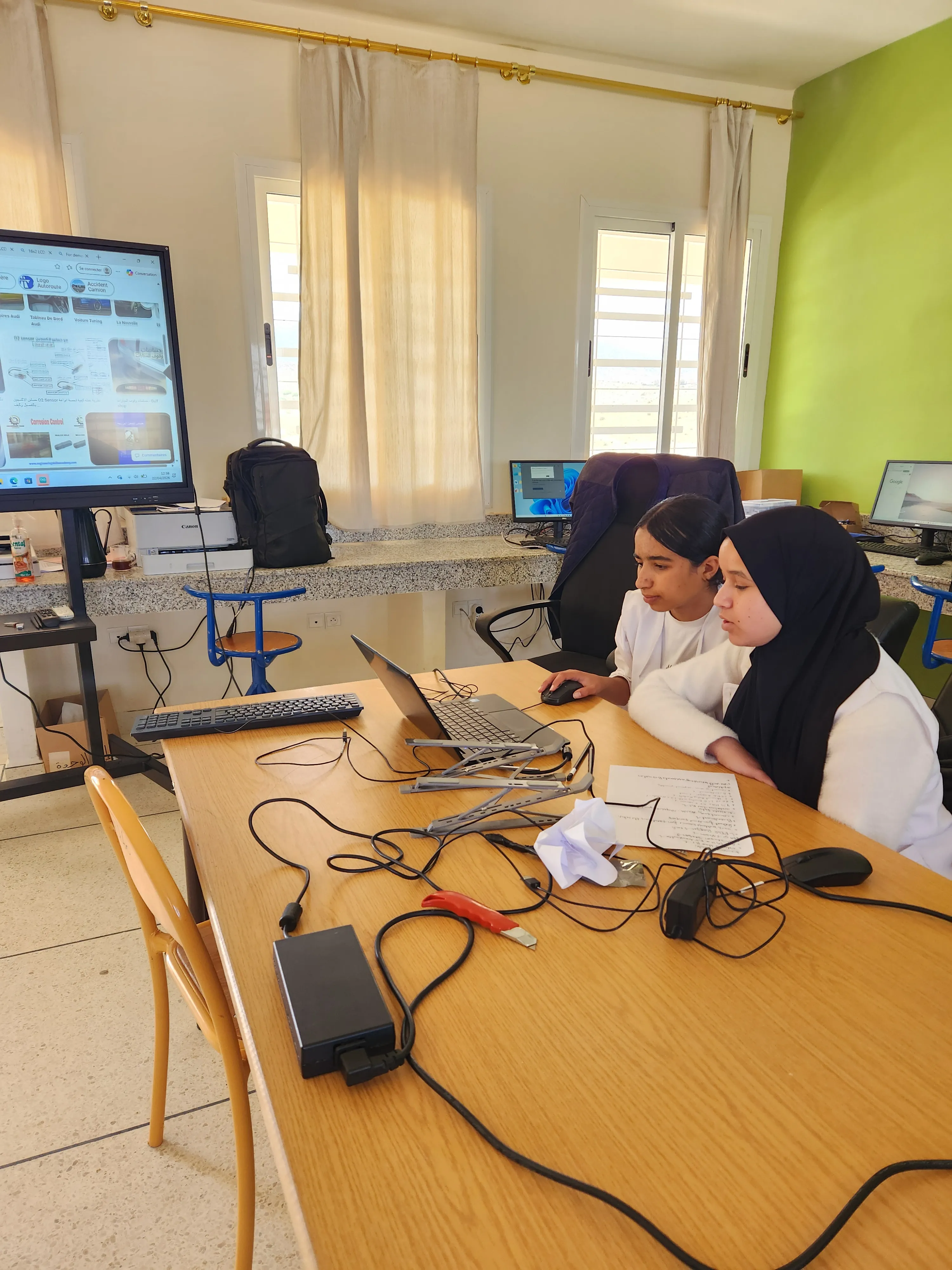
Young engineers involved in this project

Kaoutar Zaim
Biosensing and Prevention Engineer

Fatima Maanaoui
Wireless Connection and Control Engineer